 Published: 01 Aug 2026 | 11 min read
 Summarize in ChatGPT
✅
- Use five core resume sections: contact information, summary, work experience, education, and skills.
- Put your strongest relevant proof near the top after your contact details.
- Add optional sections only when they add evidence missing elsewhere.
Resume sections should help a recruiter identify your role, experience, qualifications, strongest evidence within a quick scan. Most applicants need five core sections, plus job-related optional sections.
The parts of a resume change in order and length. Graduates may lead with education and projects. Experienced applicants usually lead with work history.
What are the 5 main sections of a resume to include
If you’re deciding what sections should be on a resume, start with five core areas: contact information, a professional resume summary or objective, work experience, education, and skills.
| Basic resume sections: | What it should include: | Common mistakes: |
| Contact information | ✅ Name, city and state, phone, email, LinkedIn or portfolio | ❌ Full street address or broken link |
| Summary or objective | ✅ Target role, background, strongest qualification, one proof point | ❌ Generic career-goal statement |
| Work experience | ✅ Job title, employer, dates, relevant achievements | ❌ Duties with no scope or results |
| Education | ✅ Degree, subject, school, location, relevant date | ❌ High school details if college is mentioned |
| Skills | ✅ Relevant tools, methods, technical abilities, languages | ❌ Vague traits with no proof |
What should the 5 parts of a resume include
The five parts of a resume should answer five hiring questions:
- Who are you?
- What role fits your background?
- What have you done?
- What training do you have?
- Which job-related skills can you prove?
1. Contact information section
Include your name, city and state, phone number, professional email subject line, a relevant LinkedIn profile, portfolio, or GitHub link.
Keep these details in the main document body. Don’t place your name, phone number, or email inside a header, footer, text box, or graphic.
✅ Strong format:
Jordan Lee
Austin, TX | 512-555-0148 | jordan.lee@email.com
linkedin.com/in/jordanlee | jordanleeportfolio.com
City and state are enough for most US applications. A full street address takes up space and shares information the employer doesn’t need at this stage.
❌ Leave out:
- Photo
- Date of birth
- Marital status
- Personal social media accounts
- Multiple phone numbers
- Links unrelated to the job
Greenhouse reported that headers, footers, text boxes, columns, graphics, complex tables can cause partial or failed resume parsing.

2. Professional summary or objective section
Strong resume summary examples have two to four lines to state your target role, relevant background, strongest area of experience, and one result that supports your claim.
Use a professional summary when you already have related experience. A focused objective works better for students, recent graduates, career changers who need to explain their direction.
A useful structure is: Job title / professional area + experience level + relevant specialty + proof of performance
❌ Weak example:
Motivated professional seeking a growth opportunity where I can use my skills and contribute to company success.
This version could describe almost any applicant. It doesn’t name a role, field, skill, or result.
✅ Improved example:
Customer support specialist with four years of SaaS experience. Manages 45 tickets per week and maintains a 94% satisfaction score. Seeking a customer success role focused on onboarding and retention.
This version tells the recruiter what the applicant does, how much work they handle, how well they perform, and which role they want next.
3. Work experience section
A useful format of work experience section is:
Job title
Employer, Location | Employment dates
Three to five bullets for recent relevant roles
Fewer bullets for older or less relevant jobs
For example:
Customer Support SpecialistA useful bullet explains the action, scope, and result.
Northstar Software, Austin, TX | June 2022–Present
- Resolved 40 to 50 weekly tickets in Zendesk while maintaining a 94% customer satisfaction score.
- Rewrote 25 help-center articles, reducing repeat setup questions by 18%.
- Trained three new team members on escalation procedures and account troubleshooting.
❌ Weak bullet:
- Handled customer requests.
✅ Improved bullet:
- Resolved 40+ weekly support tickets in Zendesk with a 94% customer satisfaction score.
The improved bullet gives the recruiter three useful facts: workload, software knowledge, service quality.
A chronological and functional resume will affect how visible your career history is. Most candidates benefit from a reverse chronological structure since recruiters will not need to search for dates.
4. Education section
Include your degree, major, institution, and location. Add the graduation date, expected graduation date, GPA, honors, or coursework only when those details support the role.
Use this format:
Bachelor of Science in Business Analytics
University of Texas at Dallas, Richardson, TX
Graduated May 2025
A current student could write:
Bachelor of Science in Computer Science
Arizona State University, Tempe, AZ
Expected May 2027
Place education on a resume above work experience if:
- You’re a current student
- You recently graduated
- You have limited related experience
- The degree or license is a main job requirement
- Recent coursework directly supports a career change
A recent graduate resume sample places academic training and early experience where recruiters can find them quickly.
Move education below work experience after you’ve built several years of related work. At that point, employers usually care more about recent responsibilities and results.
5. Skills section
List a focused group of tools, technical abilities, methods, and languages that match the job description.
For most applicants, 8 to 12 relevant skills provide enough coverage without turning the section into a keyword list.
- Marketing example:
SEO strategy | GA4 | Ahrefs | Content planning | A/B testing | Email marketing | Conversion analysis
- Data analyst example:
SQL | Excel | Python | Tableau | Power BI | Data visualization | Forecasting
- Customer support example:
Zendesk | Salesforce | Ticket triage | Account troubleshooting | Customer onboarding | Knowledge-base writing
Don’t add:
❌ Skills you cannot discuss in an interview
❌ Basic tools expected for the role
❌ Progress bars or percentage ratings
❌ Broad claims such as “leadership” without evidence
❌ Long lists copied from the posting
The skills section works as an index. Your experience and projects supply the proof.
For example:
Skills section: SQL, Excel, Tableau
Experience bullet: Automated a monthly Tableau report using SQL and Excel, cutting preparation time by three hours.
The first entry confirms the keywords. The second explains how the applicant used them and what changed.
Your mix of hard skills vs. soft skills depends on the role. The strongest skills to put on a resume are relevant to the posting and supported elsewhere in the document.
Which optional sections to include on resume
Add an optional section when it supplies relevant evidence that your five core sections do not show clearly. The right sections to include on a resume depend on the role and proof available.
- Certifications and licenses
If the employer requires certifications or licenses, or if they confirm current technical knowledge, list the credential name and issuer with the date.
Leave out expired, introductory, or unrelated certificates. Minor badges can hide stronger credentials.
- Projects section
Add projects for student, technical, creative, freelance, or career-change applications. A project can show current ability when a job title doesn’t match the target role.
One r/careerguidance user had eight years in IT service management, a two-year gap, and a move into data and AI. SQL training and an analytics project connected past knowledge with the new target.
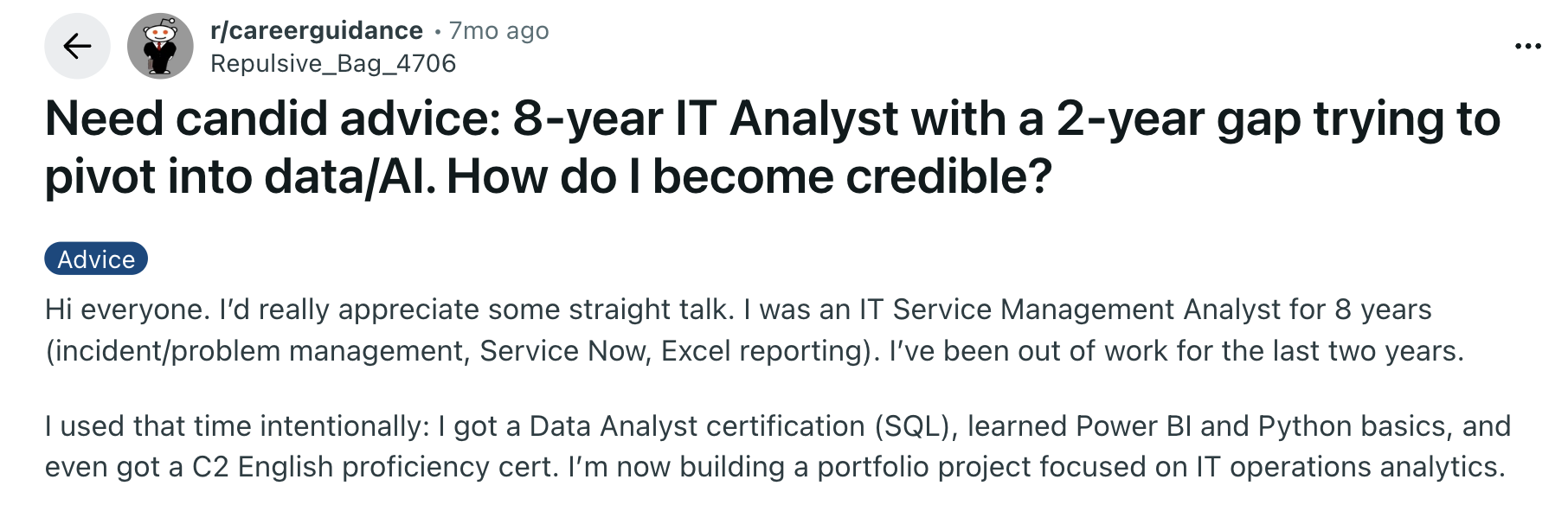
Describe the problem, your work, tools, and result. A career change resume should make that connection clear near the top.
- Volunteer experience
Add volunteer work on a resume when it shows relevant duties, fills an activity gap, or adds job-related evidence. Format substantial service like paid experience, with dates and results.
List the organization, role, dates, and results.
- Languages
List languages on a resume with an honest proficiency level. Move the section higher when the posting asks for multilingual ability or daily work in another language.
Avoid progress bars. Use native, fluent, professional working proficiency, or conversational.
- Awards, publications, or affiliations
Add these sections when entries are recent, related to the role, and supported by a clear title, organization, and date. Each entry should add evidence missing elsewhere.
What is the best resume order of sections
For most experienced applicants, the best resume order of sections is contact information, summary, work experience, skills, education, then relevant optional sections.
Change the order when another section gives stronger proof for the target job.
Standard order for experienced professionals
If you’re an experienced professional, place recent work before education because employers need current results, role scope, and tools during the first scan.
- Contact information
- Professional summary
- Work experience
- Skills
- Education
- Certifications or other relevant sections
Order for recent graduates
If you’re a recent graduate, place education, internships, and projects near the top because these sections usually contain your strongest proof of current ability for the role.
- Contact information
- Objective or summary
- Education
- Projects or internships
- Skills
- Work or volunteer experience
Order for career changers
If you’re a career changer, lead with a targeted summary, relevant skills, and recent projects, so recruiters see the connection to the new field before reviewing your older titles.
- Contact information
- Targeted summary
- Relevant skills
- Relevant projects or certifications
- Work experience
- Education
Order for technical or project-based roles
As a technical applicant, you can place skills above work history when the job has firm tool, language, platform, or certification requirements that recruiters check early during review.
- Contact information
- Professional summary
- Technical skills
- Work experience
- Selected projects
- Education and certifications
The final choice should match the resume format and your evidence.
How to label resume sections for ATS
Use familiar headings such as Work Experience, Education, Skills, Projects, and Certifications. Clear labels help recruiters find information and help parsing software classify it.
| ATS-safe heading: | Risky or unclear label: |
✅ Work Experience ✅ Professional Experience | ❌ Background ❌ Career Story |
| ✅ Education | ❌ Studies ❌ Academic Background |
✅ Skills ✅ Technical Skills | ❌ Toolkit ❌ Strengths |
✅ Professional Summary ✅ Summary | ❌ About Me ❌ Who I Am |
✅ Certifications ✅ Licenses | ❌ Badges |
✅ Projects ✅ Selected Projects | ❌ Experiments ❌ Side Work |
| ✅ Volunteer Experience | ❌ Giving Back |
| ✅ Awards and Honors | ❌ Wins ❌ Recognition Wall |
No public heading whitelist covers every ATS. Standard labels are safer because their meaning is clear.
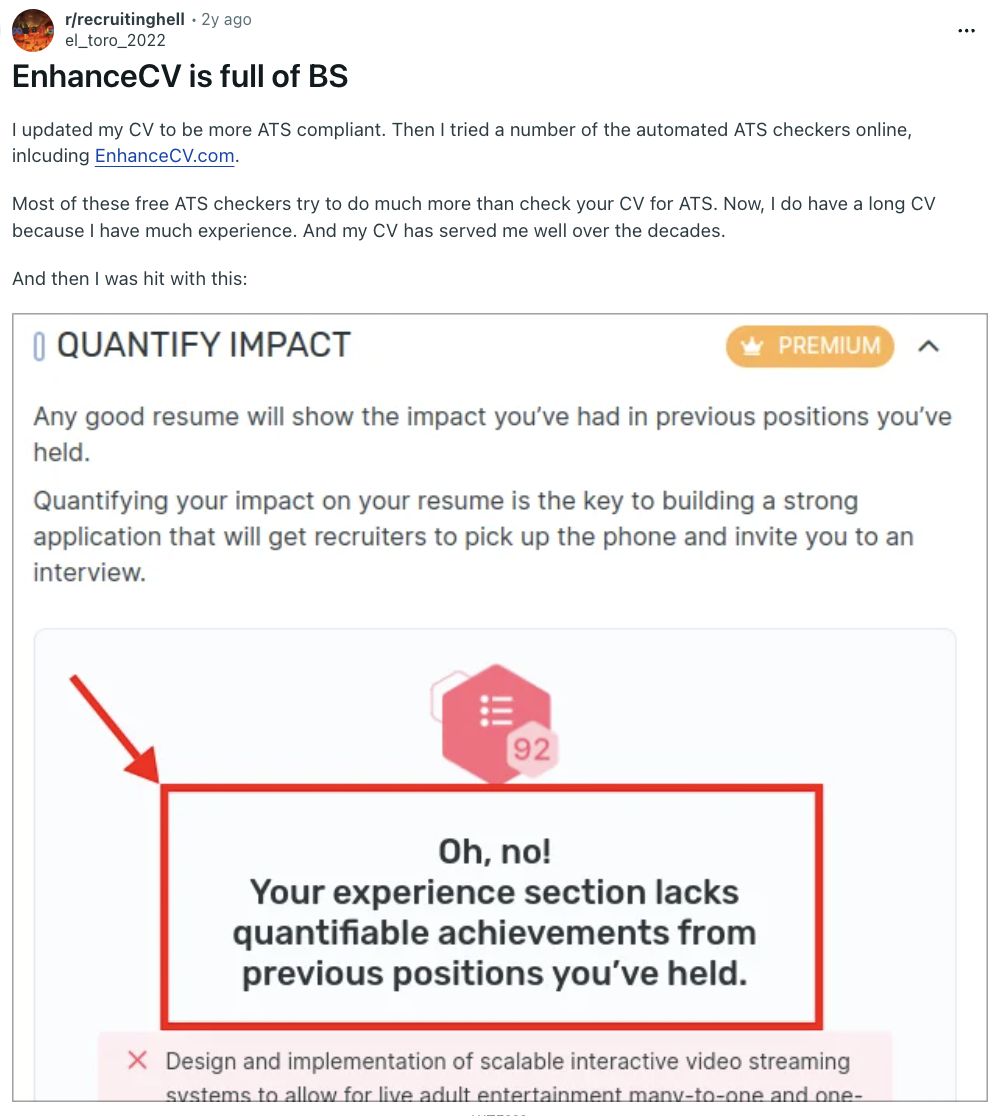
A plain heading cannot replace missing qualifications. ATS checkers can flag formatting concerns, yet their scores do not predict an employer’s decision.
In one r/recruitinghell discussion, applicants reported conflicting scanner results and unreadable “ATS-friendly” templates. One resume appeared garbled in employer systems for months.
Quick formatting checklist before you submit a resume
- Keep it scannable: Use standard standard fonts (Arial, Calibri, Helvetica) between 10–12 pt.
- Avoid parser traps: Skip columns, text boxes, tables, icons, and progress bars.
- Save correctly: Export as a clean .pdf unless the application portal explicitly requests a .docx file.
- Length rule: 1 page for less than 7–10 years of experience; 2 pages max for senior and executive roles.
Which resume sections should you leave out?
Remove a section when it repeats stronger information, contains private details, or pushes relevant experience lower on the page. Keep facts that help the employer assess your fit.
Leave out references and “References available upon request.” Employers will ask when needed. Skip a full address, photo, salary expectations, and demographic details.
Remove high school after college unless it has direct value. Unrelated hobbies rarely deserve space. A separate Accomplishments section also adds little when it repeats results already listed under work experience.
Let Resumeble work on your resume
Unsure which resume sections deserve space? Resumeble’s certified resume writers can review your background, select relevant evidence, and organize it for recruiters and application systems.
Support also covers cover letters, LinkedIn profile analysis, career coaching, and executive resume writing for senior leaders.
FAQ
What are the 5 parts of a resume?
The main five parts of a resume include contact information, a professional summary or objective, work experience, education, and skills. Optional sections such as projects, certifications, languages, and volunteer work belong only when they add relevant evidence missing elsewhere.
What order should resume sections be in?
Resume sections should usually follow this order: contact information, summary, work experience, skills, education, and optional sections. Recent graduates can move education and projects higher. Career changers may place relevant skills, projects, or certifications before work history.
What section headers does ATS recognize?
ATS software commonly reads standard headers such as Professional Summary, Work Experience, Education, Skills, Certifications, Projects, Volunteer Experience, and Awards. No single public list applies to every system, so use familiar labels and a simple document structure.