 Published: 06 Mar 2026 | 12 min read
 Summarize in ChatGPT
Today’s hiring environment has become far more complex than it was pre-COVID. Employers use recruitment software, recruiters skim resumes in under a few seconds, and many candidates now rely on AI tools to generate their applications. The result is a flood of resumes that look polished but sound generic.
A strong resume in 2026 needs to accomplish three things:
- Clearly communicate your value
- Match the language of the job description
- Remain readable for both humans and software
In this guide, I’ll walk through the exact steps professional resume writers use when building resumes for clients: from structuring the document to positioning achievements and using AI tools wisely (if at all). It's important to remember that even the best resume needs to be tailored to the job you're applying for.
How to write a resume: Step-by-step guide
A strong resume rarely comes together in a single sitting. The most effective resumes are built methodically, starting with gathering the right information and then shaping it into a clear, strategic document.
If you approach the process in stages, it becomes much easier to organize your experience and highlight the parts of your background that matter most to hiring managers. The following steps reflect the same process professional resume writers use when building resumes for clients.
Gather relevant information
Before writing anything, take time to collect the details that will eventually appear in your resume. This step may feel simple, but it often determines how strong the final document becomes. When candidates begin writing immediately, they tend to forget key accomplishments or rely too heavily on generic descriptions of their responsibilities.
Start by creating a working list that includes:
- Soft skills, hard skills, and technical skills
- Job titles, dates of employment, and key duties
- Impressive measurable accomplishments
- Educational credentials that demonstrate your expertise
- Volunteer work that helped you develop skills and experience relevant to the job
- Notable awards and honors you received
As you gather this information, it helps to build what resume writers often call a master resume. This is a longer document that contains the full record of your career history, projects, and achievements. From there, you can tailor shorter versions of your resume for specific roles without having to rebuild the content each time. Once you have collected the relevant information, the next step is to structure it in a way that highlights your strengths clearly.
Choose the right resume format
The format you choose should make it easy for recruiters to understand your experience and career progression. In most cases, clarity and familiarity work best. There are three main resume formats.
- Chronological
The chronological format lists your work experience in reverse order, starting with your most recent role. This approach highlights career progression and is widely preferred by recruiters. For candidates with a steady work history, this format typically provides the clearest picture of professional growth.
- Functional
The functional resume format focuses on the individual's skills, training, and education rather than work history. While it is a helpful formatting choice for those entering the workforce, career changers, or those with long gaps in employment, it is used less frequently today because many recruiters prefer to see experience tied to specific roles and companies.


- Combination
The combination or hybrid format blends elements of both approaches. It highlights core skills while still presenting work experience in chronological order. This format can work well for professionals who want to emphasize specialized expertise while maintaining a clear career timeline.
Regardless of the format you choose, the goal remains the same: help employers quickly understand where you have worked, what you have accomplished, and how your experience relates to the role. With the overall structure in place, the next step is to make sure employers can easily reach you.
Add professional and clear contact information
Your contact information should appear at the very top of the resume. It allows recruiters to quickly identify you and reach out if they would like to schedule an interview.
Most resumes include the following details:
- Full name
- Phone number
- Professional email address (please, no hotmom@gmail.com!)
- City and state (or country for international candidates) - no need for your street and house no
- Link to a LinkedIn profile and/or online portfolio when relevant
Your name should be slightly larger than the rest of the text so it stands out immediately when someone scans the page.
Professional presentation matters here. An email address that includes your name tends to look more credible than nicknames or casual handles. If you maintain a LinkedIn profile or digital portfolio that reflects your professional work, adding the link can strengthen your overall presentation.
After your contact information, the next section introduces you professionally.
Write a compelling resume summary
The resume summary appears near the top of the document and provides a brief overview of your background. In many cases, it is the first section recruiters read. It should be 2-3 sentences and immediately catch the reader's attention. Rather than repeating information from your work history, the summary should quickly communicate the value you bring as a candidate.
A strong summary typically highlights:
- Your professional specialization
- Years of relevant experience
- Areas of expertise or industry focus
- Notable accomplishment(s) or leadership experience
-
 Digital marketing manager with 8+ years of experience leading data-driven campaigns
for B2B technology companies. Managed multi-channel product launches and scaled paid
acquisition strategies that increased qualified leads by 42% year over year.
Experienced in SEO, marketing automation, and cross-functional campaign leadership.
Digital marketing manager with 8+ years of experience leading data-driven campaigns
for B2B technology companies. Managed multi-channel product launches and scaled paid
acquisition strategies that increased qualified leads by 42% year over year.
Experienced in SEO, marketing automation, and cross-functional campaign leadership.
-
 Marketing professional seeking an opportunity to grow my career in a dynamic
organization where I can utilize my communication, leadership, and teamwork skills.
Highly motivated and results-driven with a passion for learning and contributing to
company success.
Marketing professional seeking an opportunity to grow my career in a dynamic
organization where I can utilize my communication, leadership, and teamwork skills.
Highly motivated and results-driven with a passion for learning and contributing to
company success.
So, instead of writing a broad objective about wanting to grow professionally, a summary might briefly position you as a marketing manager who has led product launches, improved customer acquisition metrics, or scaled digital campaigns.
The goal is to provide context that encourages the reader to continue reviewing the rest of your resume. Once you have introduced your background, the next section focuses on the core of the document: your work experience.
A note on resume objectives
Resume objectives were once a standard part of most resumes. Today, they appear far less frequently, largely because hiring managers already know your objective: you are applying for the job.
Example of a typical objective: Seeking a challenging position where I can grow professionally and contribute my skills to a successful organization.
Statements like this rarely add meaningful information for recruiters.
A professional summary tends to be far more effective because it quickly communicates your expertise and career focus. That said, objectives can still make sense in a few situations:
- You are changing careers and need to explain the shift
- You are entering the workforce for the first time
- You are targeting a very specific role or industry
In those cases, the objective can clearly connect your background to the role you are pursuing. Otherwise, a concise summary usually provides much stronger positioning.

Add a results-focused work experience section
For most professionals, the work experience section carries the greatest weight during the hiring process. Recruiters look here to understand how you have contributed to previous organizations and what impact you created in your roles.
Each position should include the following details:
- Job title
- Company name
- Location of the organization
- Employment dates
- Key achievements and responsibilities
While responsibilities provide context, accomplishments tend to leave a stronger impression. Whenever possible, describe the results of your work using specific examples. For instance, instead of writing that you “managed a team,” you might describe how you led a group of employees that improved productivity or delivered measurable business outcomes. Concrete achievements help employers visualize how your experience might translate into value for their organization.
Once your professional experience is clearly outlined, the next section supports your expertise through your educational background.
List your education credentials
Unless you are a high school graduate looking for an internship or a summer position, we don't recommend you include your secondary education data on your resume. Your education section should include:
- Name of the college or university
- Location of the school
- Year of graduation (or the expected graduation date)
- Degree received

As your career progresses and your work experience grows, the education section usually becomes shorter because employers tend to focus more heavily on professional achievements. With your academic background established, the next step is to highlight the skills that support your work.
It's time to showcase your skills - whether technical, soft, or industry-specific. Some job seekers prefer to place this section right after the summary to highlight core abilities upfront, while others include it at the end of a resume for a more structured flow.
Use a skills section to highlight your strengths
The skills section helps employers quickly identify your core capabilities and technical expertise. Instead of listing every skill you possess and mixing, say 'Logistics management' with 'Time management', focus on abilities that are relevant to the roles you are pursuing. This improves clarity and also helps your resume align with keywords used in job descriptions. Skills typically fall into several categories.
- Hard skills
Hard skills are learned abilities developed through education, training, or work experience. These may include data analysis, project management, programming languages, or marketing platforms.
- Technical skills
Technical skills refer to specialized tools, systems, or technologies used within your field. Examples might include CRM software, analytics platforms, design programs, or coding frameworks.
- Transferable skills
Transferable skills include leadership, communication, problem-solving, and collaboration. These abilities become especially valuable when applying across industries or moving into leadership roles.

Beyond your core skills and experience, additional sections can sometimes strengthen your candidacy.
Optional sections that reinforce your experience
Depending on your career path, you may have additional achievements or professional activities that deserve recognition on your resume. Optional sections can include:
- Professional certifications or licenses
- Industry training programs
- Awards or recognitions
- Volunteer work or nonprofit involvement
- Professional publications or speaking engagements
When including these sections, focus on experiences that support your professional credibility or demonstrate initiative within your field.
For example, certifications in specialized software, leadership programs, or volunteer roles that showcase project management skills can all add meaningful context to your background.
Used thoughtfully, these sections help present a fuller picture of your professional contributions.
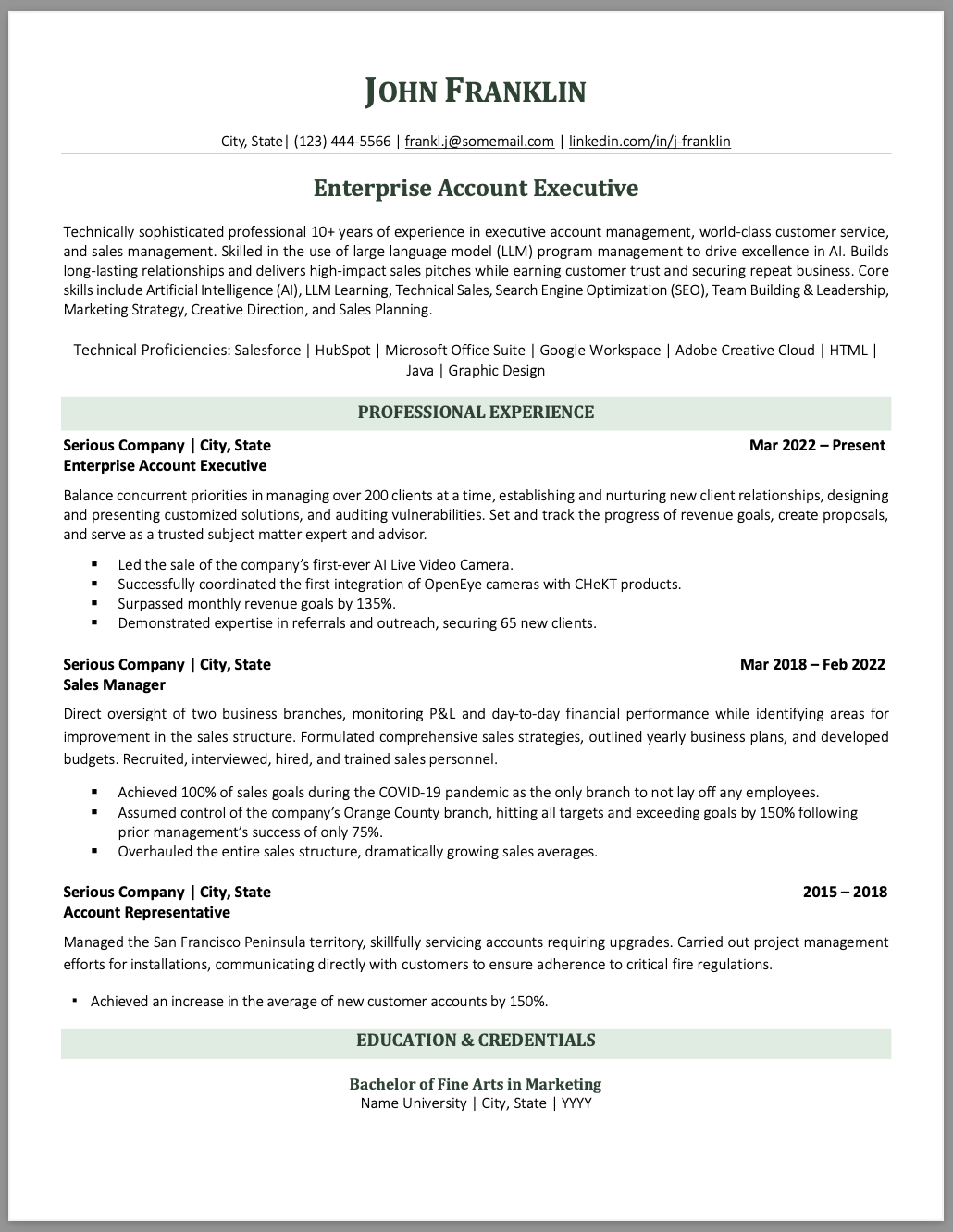
Modern resume example
Here is one of the best sample resumes following the most popular chronological format:
How AI is changing resume writing (and how to use it correctly)
Over the last two years, one of the biggest shifts in hiring has been the rise of AI-generated resumes. Many candidates now paste their experience into tools like ChatGPT or automated resume builders and generate a finished document in seconds. On the surface, these resumes often look polished. But from a recruiter’s perspective, they frequently share the same problems.
They sound generic.
After reviewing enough of them, you begin to notice the patterns: identical phrasing, vague accomplishments, and bullet points that describe responsibilities instead of real results. AI tools can absolutely be helpful in the resume writing process. The key is understanding what they are good at and where they fall short.
-
Identifying keywords from job descriptions
-
Improving grammar and clarity
-
Organizing information into sections
-
Suggesting a resume structure
-
How your work created a measurable impact
-
Why your career progressed the way it did
-
What problems you have solved for your employers
Those details come from reflection and strategy, not automation. The most effective approach today is a hybrid one: use AI tools for structure and editing, but rely on your own experience (or may I humbly suggest a professional resume writer?) to shape the narrative.
Resume writing tips to help you land the job
Here are a few valuable resume-writing tips on how to put together a compelling resume.
✅ Include keywords related to your target job: Recruiters typically use applicant tracking systems (ATS) to filter through resumes and narrow them down to applicants that meet the job position's needs. To help ensure the hiring manager sees your application, include keywords related to your desired job, often found in the job description itself.
✅ Dedicate time to form and proofread your resume: You may make a good impression on the company by proofreading your work and dedicating time to tailoring your resume for each job.
✅ Make the resume quickly scannable: You can make it easier for the ATS and recruiters to understand your resume by using practical formatting, consistent spacing and alignment, and avoiding complex headers, tables, and graphics.
✅ Get help from a professional resume writer: If you lack time to work on a resume or need assistance forming a compelling one, professional resume writers may help you create one that accurately and appropriately outlines your professional background.
Leverage resume writing services
If writing about your own experience objectively feels difficult, working with a professional resume writer can help. At Resumeble, our writers review your background, career goals, and target roles to craft a resume that highlights measurable achievements and positions you effectively for the jobs you want. The result is a resume that reflects both your experience and how recruiters actually evaluate candidates.