 Published: 04 May 2026 | 8 min read
 Summarize in ChatGPT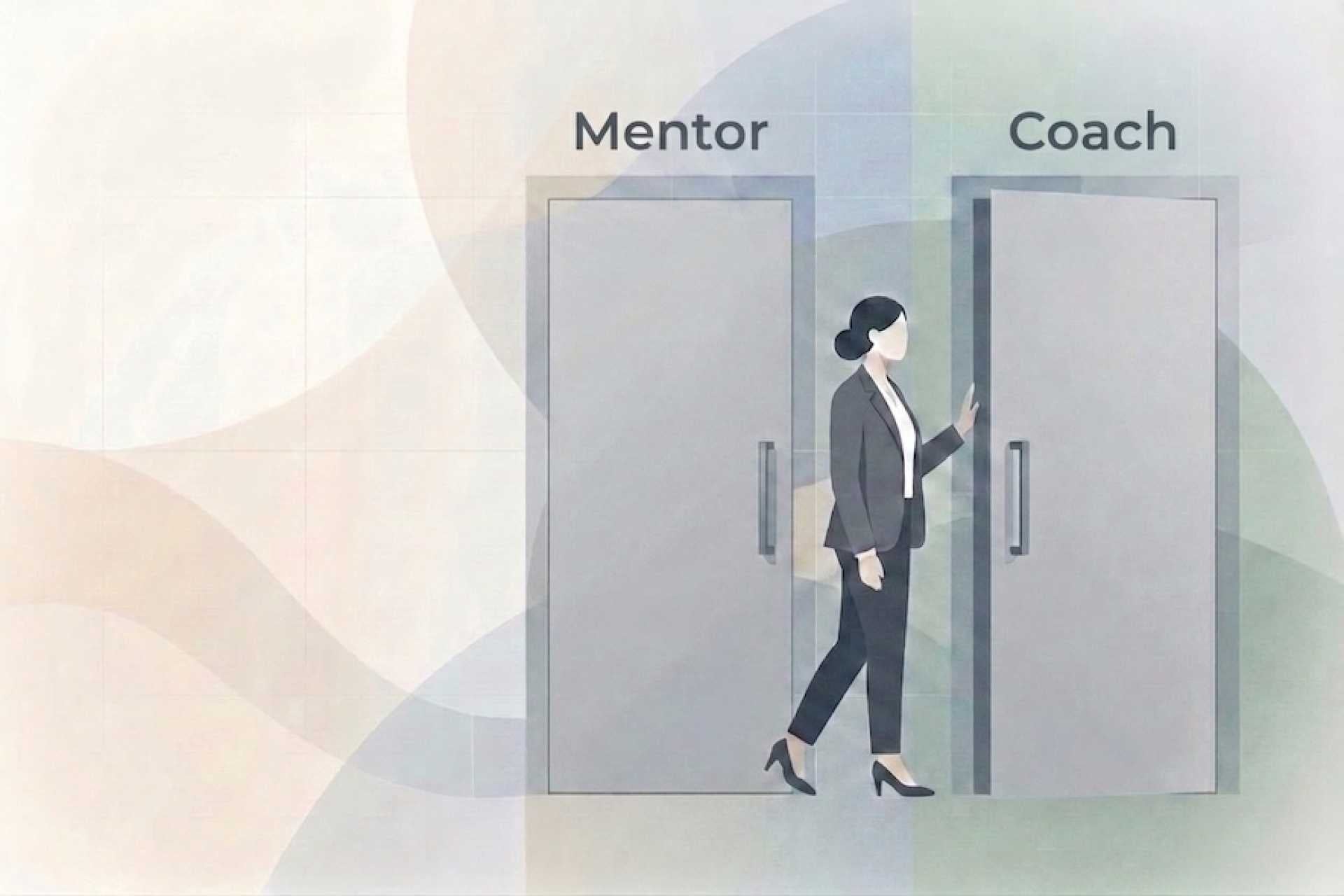
Yes. They're different in ways that matter quite a bit.
The confusion is understandable. Both involve a more experienced person helping you navigate your professional life. Both can change your trajectory. But the relationship structure, the purpose, and the outcomes are distinct — and picking the wrong one costs you time, money, and momentum you don't have to spare.
Let me break this down properly.
Career coaching vs. mentoring: What's the difference?
A career coach is a professional you hire to help you achieve specific, defined goals — landing a promotion, switching industries, negotiating a salary, rebuilding your confidence after a layoff. The engagement is structured. There's a beginning and an end, agreed-upon objectives, and a methodology the coach uses to get you there. You pay for it. The coach is accountable to you, and vice versa.
A career mentor is normally someone with experience in your field who offers guidance based on their own path (think, your senior manager or someone in your network in the role you are aspiring to). The relationship is usually informal, ongoing, and unpaid. A mentor shares what they know, opens doors, and tells you what they wish they'd known at your stage. But they don't manage your development the way a coach does — they advise, reflect, and connect.
Both are valuable. Neither replaces the other.
Coaching vs. mentoring at a glance
| Career coaching | Mentoring | |
| Relationship type: | Professional, paid | Personal, typically unpaid |
| Duration: | Time-bound engagement | Long-term, open-ended |
| Structure: | Defined sessions, goals, outcomes | Informal — meets when it makes sense |
| Focus: | Your specific career goals right now | Broader guidance from lived experience |
| Accountability: | Built in — it's part of the service | Depends entirely on the relationship |
| Who has the expertise: | Coaching methodology + career strategy | Industry or functional experience |
| Who drives it: | Collaborative, coach-facilitated | You — you reach out, you ask |
| Best for: | Career transitions, job searches, skill gaps | Industry insight, networking, long-term navigation |
Why human expertise still matters — a lot
This might sound obvious, but it's worth saying directly: no app, AI tool, or personality assessment replaces either of these relationships.
A career coach who has worked with hundreds of professionals in your field has seen patterns you simply cannot see from inside your own situation. They notice when your self-perception doesn't match what the market rewards. They ask the question you've been avoiding. They've worked with enough hiring managers to know what actually gets an interview and what's just noise.
A mentor brings to the table their lived experience inside the exact context you're trying to navigate. If you're a nurse moving into healthcare administration, a mentor who made that same transition, say, five years ago carries insights no career coach with a generalist approach can replicate (at the same time, of course, they might be overlooking some "bigger picture" issues that they did not personally experience). They remember the specific fears, the missteps, the moment things clicked, etc.
I've seen firsthand what happens when people get the support they need at the right time. Clients who come to us with a great resume but no clarity on direction often need someone to help them figure out what they're actually building toward (that's where career coaching fills a gap that resume optimization alone can't). As the counter-balance, we often see clients with a very clear career path in their heads who need a polished resume or help with their LinkedIn to get that offer.
Career coaching vs. career counseling — they're not the same either
People often use these terms interchangeably, and they shouldn't. When it comes to career coaching vs. career counseling, the distinction comes down to orientation.
- Career coaching is more forward-facing and action-oriented. A coach assumes you have what it takes — the job is to help you use it better, faster, and more strategically. Coaches work on interview prep, executive presence, negotiation, and career positioning. Less discovery, more execution.
- Career counseling tends to be more diagnostic and exploratory. A career counselor is often someone with a background in psychology or counseling. They can help you understand your interests, values, and aptitudes, frequently through standardized assessments. It's common in academic settings.
If you genuinely don't know what you want to do, counseling might be the better starting point. If you know what you want and need help getting there, coaching gets you there faster.
What about life coaching? And therapy?
Since we're clarifying terms, let's go all the way.
Life coaching is broader than career coaching. It addresses your goals across multiple areas — relationships, health, habits, purpose — not just your professional life. A life coach helps you design the kind of life you want to be living. A career coach helps you build a career within that life. The two overlap, especially when work-life balance, confidence, or burnout is part of what's holding someone back professionally.
Therapy is a different category altogether. A therapist is a licensed mental health professional trained to help you process psychological patterns, past experiences, trauma, anxiety, and other clinical concerns. Therapy goes backward to go forward. Coaching goes forward, full stop. The two aren't in competition — in fact, some of the best outcomes I've seen happen when someone is doing both simultaneously. But expecting a coach to provide what only a therapist can is a setup for disappointment on both sides.
Here's a simple way to think about it:
- Therapy: healing and understanding the past
- Life coaching: designing the full picture of your life going forward
- Career coaching: executing a specific professional goal
- Career counseling: exploring what path fits you
- Mentoring: learning from someone who has walked a similar road
When should you hire a career coach?
Hire a career coach when you have a specific goal and a timeline, and you're not reaching it on your own.
Some specific cases where coaching delivers real value are:
- You've been applying for months and getting nowhere (and you're not sure why)
- You're ready for a promotion but can't seem to make a compelling case for yourself internally (hello, impostor syndrome!)
- You want to switch industries and don't know how to position your existing experience (is AI threatening your job, maybe?)
- You've just been laid off and need to move quickly and strategically (looking at you, Big Tech!)
- You're negotiating a compensation package and don't want to leave money on the table
- You're about to make a big career decision and need a structured way to think it through
The common thread in all of these: there's a gap between where you are and where you want to be, and closing that gap requires more than just effort — it requires strategy.
When should you find a mentor instead?
Look for a mentor when you want perspective, not a plan.
Mentors are particularly valuable when you're early in your career and still building your map of how the industry works. They're also invaluable when you're navigating an environment you're new to — a different country, a different sector, a different level of seniority — and you need someone who can tell you what the unwritten rules are.


A few things to keep in mind about mentoring relationships:
✅ You have to drive them. A good mentor will give you their time, but they won't manage the relationship for you. You reach out, you come prepared, you follow up.
✅ They work best when there's genuine mutual respect and natural chemistry. Forced mentoring — the kind companies set up in formal programs — can be fine, but it rarely produces the same depth as a relationship that grew organically.
A mentor is not your coach. Don't put that pressure on them.
So which one do you need?
Honestly? At different points in your career, probably both — but rarely at the same time for the same purpose.
- If you're early career and building your foundation - a mentor who is five to ten years ahead of you in your field is worth its weight in gold.
- If you're mid-career and facing a specific challenge (a transition, a stall, a pivot) - a career coach will get you moving faster and with more clarity than almost anything else.
- If you're a senior professional navigating complexity, like politics, leadership, executive positioning - both are useful, and the lines between them start to blur in interesting ways.
* * *
One thing I want to warn against is using the search for the "right" kind of help as a way to delay moving forward. Some people spend months researching coaches and mentors while their situation stays exactly the same. At some point, just commit to a path and start walking it.
At Resumeble, we've worked with thousands of professionals across every career stage, geographic location, and life situation. And one thing is always true: the people who move forward decisively, act quickly, and ask for help specifically - always win. The variables are never perfect. That's exactly why the support exists.