 Published: 01 May 2026 | 8 min read
 Summarize in ChatGPT
Teaching is one of those careers where people outside of it consistently underestimate the complexity of what it actually takes. You're managing a classroom of 25 kids with different learning styles, communication needs, and home situations. And doing all of it while remaining the calm, encouraging adult in the room every single day.
But when you need to write a resume, suddenly, all of that feels impossible to put into words and quantify. The resume sounds flat, details are forgotten, and it becomes a race to the bottom of daily churn and duties vs accomplishments and numbers.
We've helped hundreds of educators land new positions over the years, and the pattern we notice most often is that teachers dramatically undersell themselves on paper. Here's how to write a teacher resume that actually reflects what you do.
What makes teacher resume different
Unlike a sales or project manager role, where the numbers speak for themselves, teachers often feel their work is too "soft" to quantify. That assumption is not entirely correct, and it's costing you interviews.
Think about what you actually do. Have you raised reading fluency scores by 18% across your third-grade class? Have you, maybe, reduced disciplinary referrals by restructuring your classroom management approach? Did you build a tutoring program that served 40 students and ran entirely on your own initiative? Those are achievements worth talking about, and they belong on your resume (with numbers attached!).
The soft skills matter too. Patience, adaptability, cross-cultural communication, conflict resolution are the necessary attributes of successful teachers. But they do land harder when they're connected to outcomes. "Strong communicator" tells a hiring manager nothing. "Facilitated weekly parent-teacher check-ins that reduced absenteeism by 22% in one semester" tells them everything.
Structure: what to include and in what order
A strong teaching resume follows a fairly standard structure, but the decisions you make within each section are what separate a forgettable document from one that gets you called back.
1. Professional summary (3-4 lines, right at the top)
This is your first impression. Please don't open with "Dedicated and passionate educator" — every teacher's resume says that. Instead, try something like: "Middle school science teacher with 7 years of experience building inquiry-based curricula in Title I schools. Consistently improved state assessment scores through differentiated instruction and data-driven lesson planning."

The summary should reflect the level and subject you're targeting. An elementary teacher resume will read differently from a high school AP history resume. Hiring committees, especially seasoned recruiters, notice when a summary feels copy-pasted and generic.
2. Teaching experience
List positions in reverse chronological order. For each role, lead with 2-3 bullet points that describe what you did, then follow with 1-2 that show what resulted from it. This structure keeps the focus on impact without making the resume feel like a data table. If you've held student teaching positions, those count. List them. If you've supervised student teachers yourself, that counts more.
3. Education and certifications
Your degree goes here, along with your state teaching license and any endorsements. If you're in the process of adding an endorsement, such as special education, ESL, or reading specialist, note that as well. Hiring managers want to see where you're headed, not just where you've been.
4. Skills section
Keep this tightly curated. Classroom management, IEP development, PBIS frameworks, Canvas/Google Classroom/Schoology, parent communication platforms — list tools and competencies that are genuinely part of your practice. Padding it with vague terms like "leadership" and "teamwork" adds visual clutter and subtracts credibility.
Teacher resume examples: what good looks like
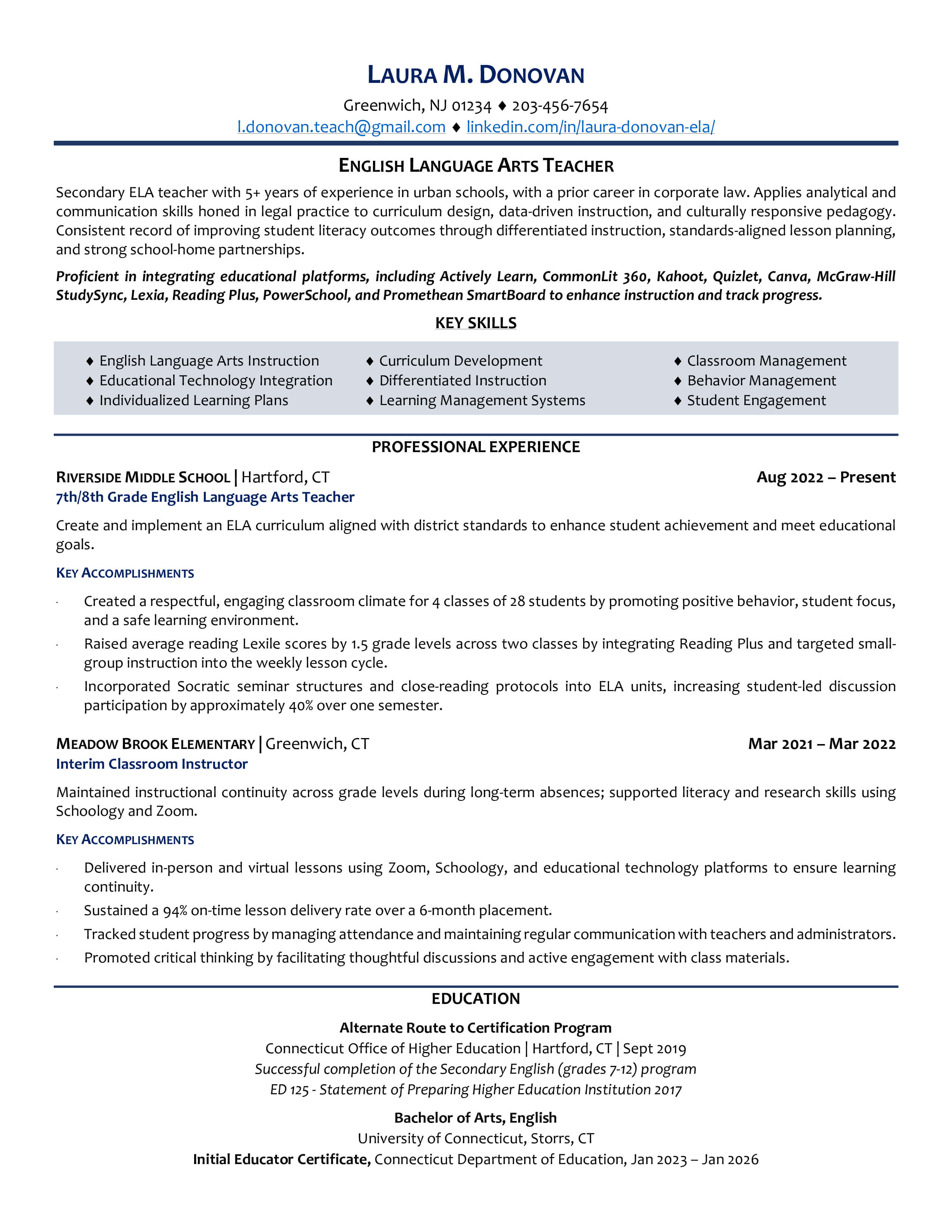
Reading resume advice is one thing. Seeing it applied is another. If you're still not sure how your experience should look on paper, our sample educator resume shows you a complete, real-world example — the kind our writers produce for clients every day.

Demonstrate AI skills in teaching
This one comes up a lot lately, and it deserves a direct answer. Hiring committees at school districts are paying attention to whether candidates understand and can thoughtfully navigate artificial intelligence in the classroom. It's not about whether you use ChatGPT or Claude to write quiz questions (though some districts are starting to ask). It's about whether you've thought critically about what AI does well, what it doesn't, and how to help students engage with it responsibly.
If you've integrated AI tools into your practice in any capacity (for example, using them to generate differentiated reading passages, running digital literacy units that address AI bias, or even just developing a classroom policy around AI use), put that on your resume. It signals professional awareness that a lot of applicants simply don't have yet.
On the resume writing side, a note worth making: AI tools can help you brainstorm bullet points or structure your document, but they tend to flatten the voice out of a resume and produce language that reads as generic to experienced screeners. Use them as a starting point if it helps, but rewrite in your own words. The specificity and the personality are what make a teaching resume memorable.


Other tips for an improved teacher resume
Good teacher resume tips share a few qualities that have nothing to do with length or design. They're specific, tailored, and treat the reader's time as valuable. Here are four things that make a real difference.
✅ Mirror the job posting's language
Districts use specific terminology for a reason. If "culturally responsive teaching" is in their mission statement and it reflects your practice, use those exact words.
✅ Lead with your certifications
A reading specialist endorsement or Gifted Education certification buried at the bottom of the page is practically invisible. Put it in your summary where it gets seen.
✅ Tailor for grade level and subject
Kindergarten and AP Chemistry are not the same job. The skills, the parent dynamic, the classroom management approach — all different. Your resume should make that clear.
✅ Show how you used data
"Used student data" tells a hiring committee nothing. "Used bi-weekly Dibels results to regroup 28 students and adjust phonics pacing" tells them you know what you're doing.
Teacher's resume vs. academic CV: which one do you need?

These two documents get mixed up more than they should, and submitting the wrong one can quietly work against you before anyone reads a single word. The difference comes down to purpose and audience.
The academic CV
A CV is a comprehensive record of your academic career, designed for university hiring committees and research-focused roles. It typically includes:
- Research interests and publications
- Conference presentations and grants
- Teaching philosophy statement
- Professional affiliations and academic honors
Length is not a concern. A senior academic's CV can run 10 pages and that's entirely expected.
The teacher resume
A resume is built for a school administrator or district hiring manager screening dozens of applications. They want to quickly determine whether you can run a classroom, move students forward, and work well with a team. It should include:
- A targeted professional summary
- Teaching experience with measurable achievements
- Certifications and endorsements
- Relevant skills and tools
One to two pages with specific outcomes and nothing that isn't directly relevant to the role.
The middle-ground trap
If you hold a master's or doctorate and you're applying for a K-12 position, resist the instinct to include everything. A hiring principal at a public middle school is not looking for a scholar. They're looking for someone who can teach.
The one exception: some private schools with a strong academic culture do ask for a CV or a hybrid document with a teaching philosophy statement. If the posting asks for one, follow those instructions exactly, and if it doesn't specify - send a resume.
Quick word on the job itself
Teaching doesn't get enough credit. This job doesn't only shape academic outcomes, it shapes how children see themselves, handle setbacks, and treat other people. The teachers who stay in it long-term do so because they're genuinely committed to that, even when the pay and the conditions make it harder than it should be. Your resume should reflect that commitment, but it should also show that you're a professional with measurable skills and a record of results. Those things are not in conflict. The best teaching resumes I've seen manage to hold both — the heart and the evidence.
* * *
If you've been putting off updating your CV or resume because you don't know how to translate what you do into resume language, start with one achievement. One specific thing you did that made a measurable difference for a student or a group of students. Build from there.
The job market for teachers varies by region and subject area, but competition for desirable positions is real. A strong teaching resume isn't a guarantee, but a weak one is a consistent reason to not get the job you want. Make sure your resume reflects all the work you've put in the classroom.