 Published: 08 Jul 2026 | 10 min read
 Summarize in ChatGPT
✅
- Key signs of an incompetent boss: micromanaging, vague expectations, public criticism, favoritism, taking credit for your work, avoiding feedback, and making you feel incompetent.
- If you feel your boss is making you feel incompetent, compare their words with the facts. Check which goals were set, what work was delivered, the metrics, and the written feedback.
- To deal with a difficult boss, document your work, confirm priorities in writing, protect your visibility, set boundaries, and prepare your next move before the situation worsens.
Learning how to deal with a difficult boss starts with separating a few bad situations from a pattern. If your boss changes expectations, criticizes without examples, takes credit for your work, or makes you feel incompetent, see how to protect your work and career.
A bad manager can hurt more than one person’s confidence. Gallup’s State of the Global Workplace 2026 report shows that global employee engagement dropped to 20% – it’s the lowest since 2020. The report also links much of the drop to lower manager engagement.
To deal with a difficult boss, document repeated behavior, confirm goals in writing, ask for clear feedback, protect your visibility, and set boundaries.
If the situation keeps damaging your confidence or career growth, start planning your next move – update your resume and look for new opportunities.
What are the signs of a bad manager?
Micromanaging, giving unclear instructions, publicly criticizing others, and prioritizing control over outcomes are all signs of bad leadership. It’s also a good reminder of some key differences between a democratic vs. an autocratic boss.
Here are key warning signs to watch out for:
1. Micromanages even small tasks
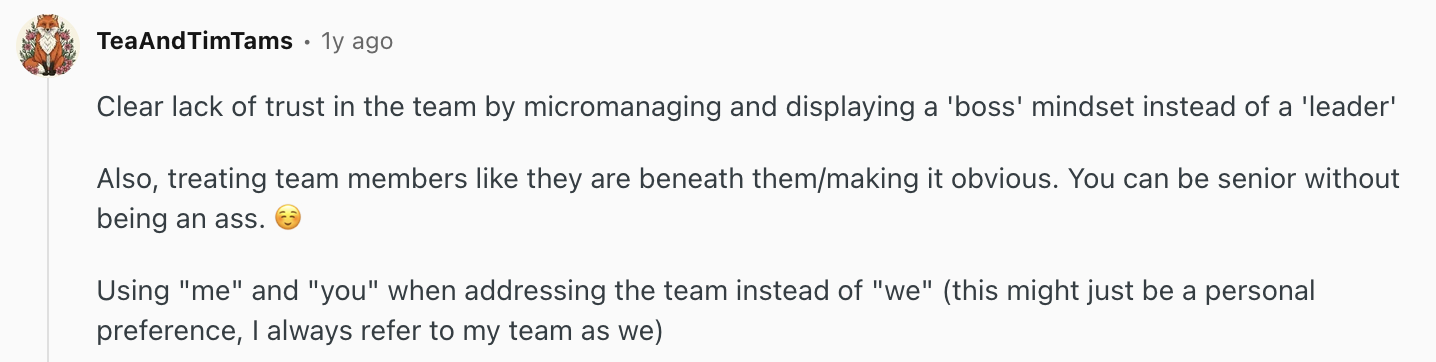
A manager who checks in constantly on things that don’t need checking doesn’t trust your judgment. For example, if your manager asks for hourly updates on a task that takes a week to finish, they’re hovering.
How this can look:
- Rewrite your emails before you send them
- Ask for status updates multiple times a day on low-risk tasks
- Require approval for decisions you’re qualified to make alone
2. Gives vague or conflicting instructions

Some managers give assignments missing clear goals, then get upset when the results aren’t what they expected. A common scenario: a manager asks you for "a quick summary" of a project, then criticizes the summary for missing details they never said they wanted.
How this can look:
- Instructions change mid-project without explanation
- Feedback focuses on things that were never part of the task
- Team members get different answers to the same question
3. Criticizes in public

Public criticism might feel like accountability, but it rarely changes behavior. People tend to hide their mistakes instead of correcting them. For example, a manager points out your mistake during a team meeting, in front of six other people, instead of pulling you aside afterward.
How this can look:
- Mistakes get called out in group settings
- One-on-one meetings rarely happen or are often canceled
- Praise is rare, but public correction is frequent
4. Plays favorites
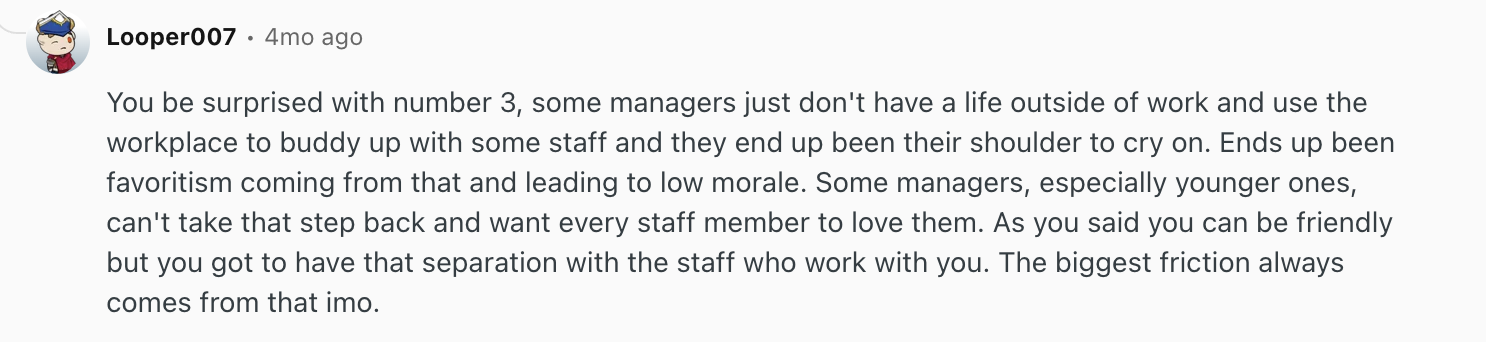
Favoritism shows up as unequal access to opportunities, information, or leniency. Even small, consistent favoritism adds up. A typical example: one employee is allowed to miss deadlines without consequences, but another is called out when they do the same thing.
How this can look:
- Certain employees get the best assignments regardless of performance
- Applies different rules depending on who’s involved
- Praise and recognition go to the same one or two people every time
5. Avoids career development conversations
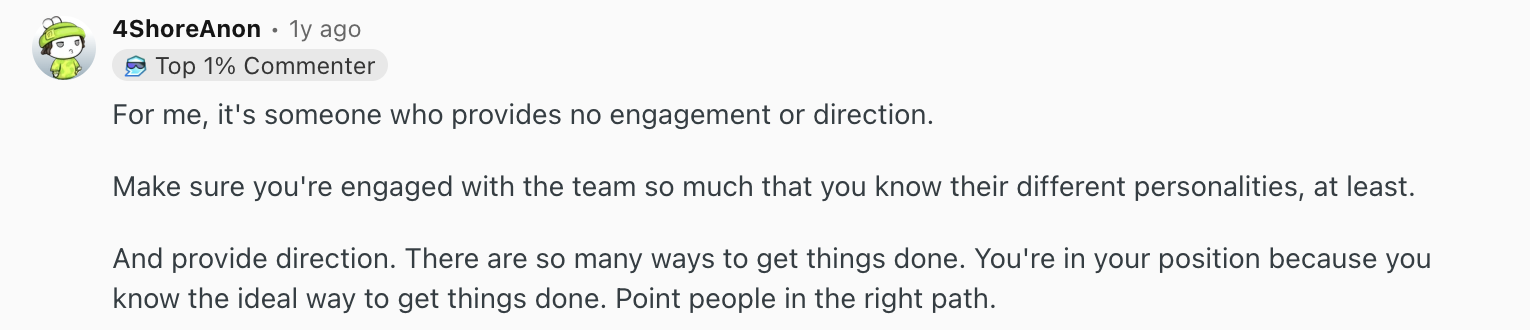
That silence usually means one thing: they aren’t building your skills. You can see it when performance reviews focus only on tasks completed, with no mention of where you want to go next or how to get there.
How this can look:
- Skips discussion of growth or promotion on performance reviews
- Brushes aside requests for stretch assignments
- Can’t articulate what your next role could look like
6. Changes priorities without explaining why
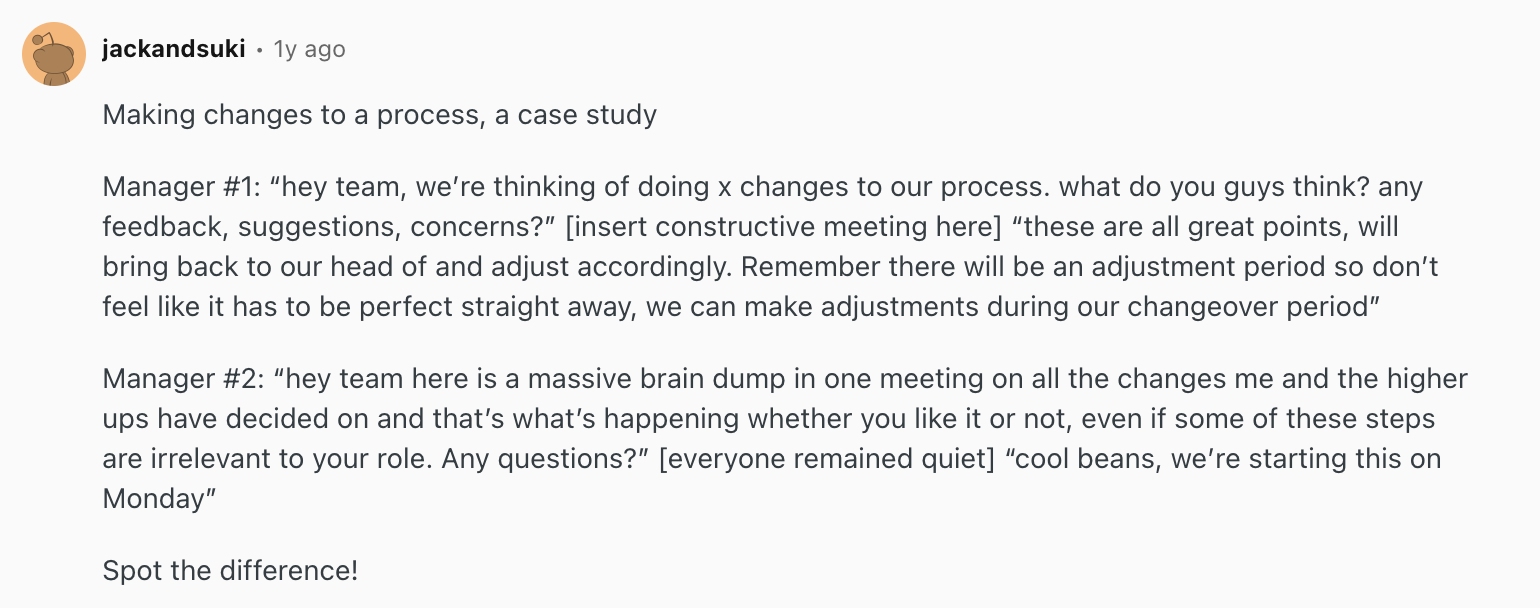
Managers change priorities all the time. The problem is that when they do it without context, the team gets confused. Say a manager asks the team to focus on one project for two weeks, then suddenly demands their full attention on another.
How this can look:
- Projects get dropped or restarted with no reasoning given
- The team hears about priority shifts through rumor, not direct communication
- Work completed under old priorities gets treated as wasted effort
7. Ignores workload and burnout signs

In team management, chronic neglect of workload commonly signals a deeper work-life balance issue. A usual pattern: you mention feeling overwhelmed, and the manager responds by adding another project instead of adjusting the workload.
How this can look:
- New assignments arrive with no discussion of the workload
- Requests for support or extra time get denied without explanation
- Signs of exhaustion (missed deadlines, low energy, mistakes) go unaddressed
8. Doesn’t protect the team from chaos

Good managers act as a buffer between their team and organizational noise. Bad managers pass every bit of pressure straight through, without filtering what actually matters. For instance, a manager forwards every executive email that demands "urgent" action without evaluating what’s truly time-sensitive for the team.
How this can look:
- Every request from leadership gets treated as equally urgent
- The team absorbs stress from meetings that the manager didn’t prepare them for
- Deadlines shift constantly based on outside pressure with no buffer
9. Makes people leave

Turnover is the clearest, most measurable sign of a bad manager – the one you can count.
How this can look:
- Multiple resignations happen within the same team over a short period
- Exit interviews consistently mention the same manager-related concerns
- High performers leave first, since they have the most options elsewhere
Self-check: When your boss makes you feel incompetent
Constant criticism drains your energy and can make you battle severe imposter syndrome. A toxic manager often uses criticism to keep you insecure and too small to look for a better job elsewhere.
To figure out if the problem is your work or their leadership style, run through this quick self-check:
| Self-check question: | Answer: |
| Do project expectations change after you deliver the work? | Yes/No |
| Do other capable teammates seem confused by the same assignments? | Yes/No |
| Do you get harsh feedback without clear examples? | Yes/No |
| Are your wins ignored while small mistakes get repeated often? | Yes/No |
| Do you feel nervous asking basic questions? | Yes/No |
| Do written instructions differ from later verbal feedback? | Yes/No |
| Do other leaders, clients, or coworkers respond well to your work? | Yes/No |
You’re dealing with flawed management if you answer yes to most of the questions.
Protect your peace of mind and your reputation instead of trying to please them. Get the data, client praise, and project metrics that prove your impact.
10 universal scenarios to deal with a difficult boss
To protect your career, rely on facts instead of verbal agreements or emotional reactions. A difficult boss can twist conversations, forget what they approved, blame you for unclear direction. Your job is to keep your work clean, visible, and easy to prove.
Here’s how to handle it:
1. Document patterns, not feelings
Keep a private log – notes app, spreadsheet, whatever works. Skip "he was rude to me" and write "March 3: asked for hourly updates on a task due Friday." Dates and specifics are what actually protect you if things go sideways later.
2. Get everything in writing
If your boss says something in the hallway or on a call, don’t just nod and move on. Send a quick follow-up: "Confirming I’m focused on X this week." Takes 30 seconds and makes it much harder for them to claim they never said that.
3. Clarify expectations before you start
Don’t wait until you’re halfway through a project to realize you’re guessing. Ask straight up: "What would a strong version of this look like?" It can save you hours of redone work.
4. Let your work do the talking
You can’t control how your boss acts. You can control how consistent and reliable you are. When your work is solid and your deadlines are met, you’re building a track record that speaks for itself – no matter what they say.
5. Make sure people see what you actually did
If credit tends to disappear, stop keeping your progress private. Loop a teammate in on updates. Post wins in a shared channel. It’s a paper trail that proves the work was yours.
6. Draw a line and hold it
A boss who texts at 9 PM will keep doing it until someone pushes back. Pick your limits – no weekend replies, no last-minute Friday asks – and stick to them without a long explanation every time.
7. Speak up before problems blow up
Waiting quietly and hoping it works out rarely does. If a deadline’s at risk or priorities feel unclear, say something now. A manager has a much harder time blindsiding someone who’s already flagged the issue.
8. Loop in HR when it crosses a line
If this moves past "difficult" into harassment, discrimination, or retaliation, that’s HR’s job to handle – not something to handle without support. Walk in with your documented timeline. Specific dates carry way more weight than "it’s been rough."
9. Lean on people who’ve got your back
Talk to a coworker you trust, a mentor, or a friend outside the office. Sometimes you’re too close to the situation to tell if it’s a bad month or a genuinely bad boss – an outside perspective helps you see it clearly.
10. Start your exit plan before you’re running on empty
Don’t wait until you’re completely burned out to update your resume. Do it now, while you can still think straight about your wins. See how to demonstrate leadership skills on your resume to show real proof of what you can lead.
How to talk to a bad manager without making it worse
How you say something to your boss matters as much as what you say. Try these ready-to-use scripts for the exact situations covered earlier:
| Scenario | What to say |
|---|---|
| Micromanagement | "I want to keep you updated without slowing the work down. Would a short update every Monday and Thursday give you enough visibility?" |
| Unclear feedback | "I want to get this right. Can you define what a strong version should include before I revise it?" |
| Public criticism | "I understand this needs to be fixed. I'd like to discuss the details one-on-one so I can address it properly." |
| Favoritism | "I'd like to understand how assignments are being decided. What criteria should I meet to be considered for similar opportunities?" |
| No growth support | "I'd like to spend part of our next 1:1 on growth. What skills or results would put me in a stronger position for the next level?" |
| Shifting priorities | "I can shift to the new priority. To avoid losing work, can you confirm what should pause, what should continue, and what deadline matters most?" |
| Workload overload | "I can take this on, but I'll need to move one current task. Which priority should shift so I can do this well?" |
| Team chaos | "I'm seeing several urgent requests at once. Can we rank them so I know what needs action today and what can wait?" |
| High turnover | "I've noticed a lot of change on the team. What should I expect around priorities, workload, and support while the team is short-staffed?" |
Conclusion: Separate bad manager traits from your work
Working under poor leadership stalls your career. It doesn’t define your professional worth.
You can shore up your reputation starting today by setting firm boundaries, getting project targets in writing, logging your daily performance data.
If the workplace remains toxic, focus your energy on an exit strategy. Update your profile with professional resume writers to keep your job search stress-free and move forward. Keep a record of what you’ve actually done and pivot toward a company that supports your growth.