 Published: 05 Dec 2025 | 7 min read
 Summarize in ChatGPT
Take the classic line: “I like long walks on the beach.” On a dating profile, that’s as forgettable as writing “team player” on a resume. Both are fluff. Both get ignored.
The more you can bring yourself to life in your dating profile or your resume, the better your chances of being noticed.
Resume vs. dating profile
In job searching, you polish your resume, highlight your achievements, and hope the recruiter notices. In dating, you polish your profile, highlight your “likeability factors,” and hope someone swipes right.
Specificity makes all the difference. In recruiting, resumes with concrete metrics (for example, “increased revenue by 32%”) get far more callbacks than vague ones. The same rule applies in dating: “I love travel” is forgettable; “I hiked the Pacific Crest Trail last summer” is memorable. Specificity sells.
And let’s be honest: most people think they’re being specific when they’re not.
“Foodie,” “adventurous,” and “hard worker” are the dating-and-career equivalent of writing nothing at all. These descriptors tell no stories. They spark no curiosity and demonstrate zero effort.
A recruiter sees “results-driven professional” and thinks, “Driven where? By whom?”
A dater sees “adventurous” and thinks, “How adventurous? Because last week I rearranged my pantry, and that felt edgy.”
You don’t need to write a novel. Just add one tiny detail that makes someone feel like they’re meeting a real human being rather than a placeholder character.
The screening process
Recruiters scan resumes for red flags: employment gaps, vague titles, or discrepancies in your job history. Daters scan profiles for red flags: blurry photos, “just ask” bios, or pictures with your ex awkwardly cropped out.
Research shows recruiters spend an average of 7.4 seconds scanning a resume before deciding if you’re worth a deeper look. In dating apps, people spend even less time. Some studies suggest just 3 to 5 seconds per profile.
The lesson is simple: impact in the first impression matters more than depth.
And the similarities continue when you consider “instant no” criteria. Recruiters bail when they see chaotic formatting or five pages of unrelated jobs. Daters bail when they see sunglasses in every photo, gym selfies, or the infamous fish-holding picture.
Both groups are just trying to make faster decisions with limited information — which means your job is to make that information crystal clear.
Referrals matter
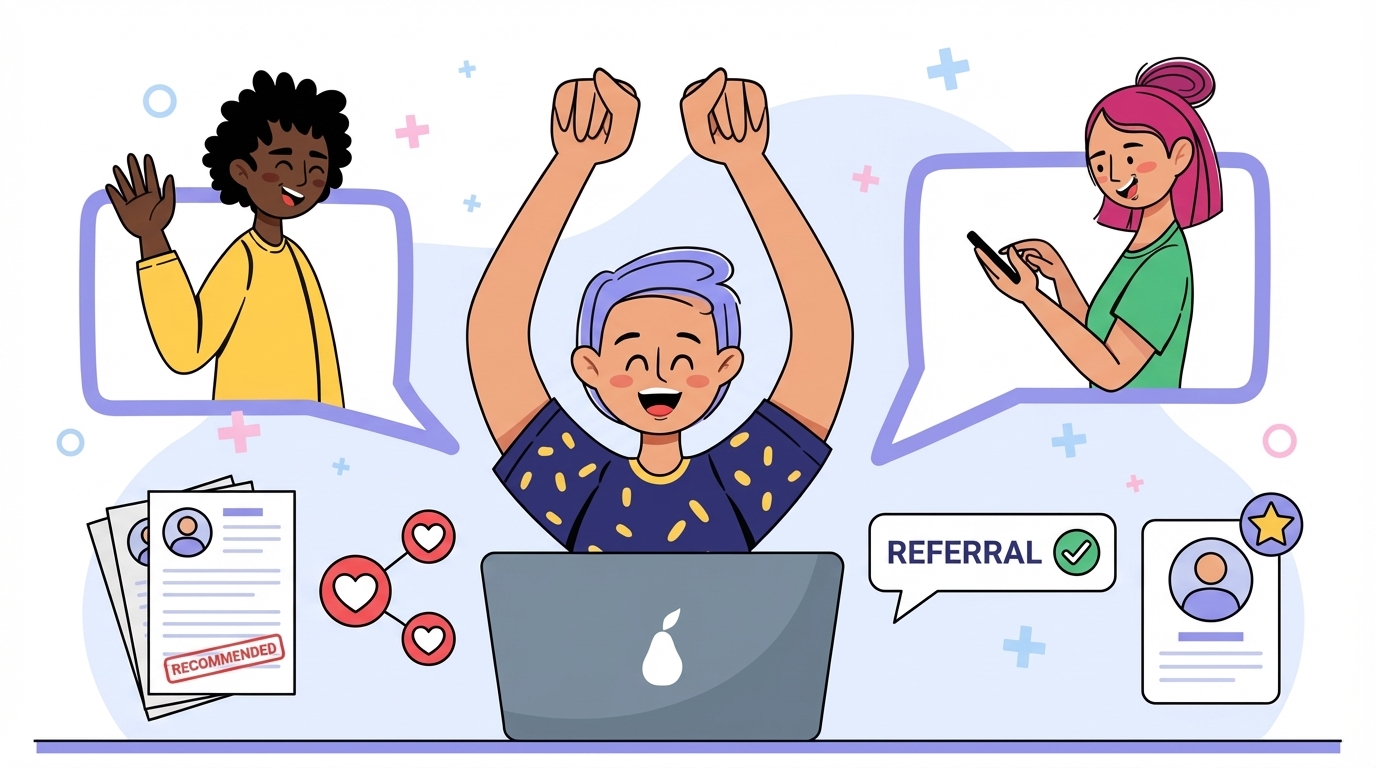
In job searching, referrals are gold. A huge percentage of hires come through someone vouching for you. Companies trust candidates who come recommended. Dating works the same way. A friend introducing you carries more weight than a cold swipe. Social proof matters. Whether it is a recruiter or a date, people lean on signals from trusted sources.
And this is why “my friend wants to set us up” remains undefeated as a dating strategy. It's similar to when a recruiter may ignore 200 online applicants but instantly review one referral from a trusted source.
Referrals remove uncertainty. They save time. They reduce risk. In jobs and dating, we’re all trying to avoid wasting time on bad fits — and a little social proof can do half the work for us.
The interview vs. the first date
In interviews, you’re asked, “Tell me about yourself.” On first dates, you’re asked, “So, what do you do?” Both are traps if you ramble. The goal isn’t to dump your life story. It’s to connect the dots and show value.
In interviews, you connect the dots between your skills and the company’s needs.
For example: “I’ve led projects that cut turnaround times in half, which freed leadership to focus on growth.” That shows professional value.
In dating, you connect the dots between your experiences and what you bring to someone’s life.
For example: “I love cooking for friends because it’s my way of creating connections.” That shows personal value.
The difference is the setting, but the principle is the same. In both cases, you’re not just listing facts. You’re showing why those facts matter to the other person.
And here’s the part no one admits:
On both dates and interviews, people are also evaluating your energy, your tone, and your ability to make conversation without melting under pressure. You could be the most qualified person in the room, but if the vibe is off, the match won’t happen. Chemistry matters in hiring more than companies want to admit, and in dating more than daters want to acknowledge.
The offer stage
In job searching, you negotiate salary, benefits, and title. In dating, you negotiate exclusivity, boundaries, and what to eat.
In both worlds, negotiation is healthiest when you know your non‑negotiables. Recruiters respect candidates who are clear about deal‑breakers. Dates respect people who know what they want. Ambiguity wastes everyone’s time.

Ghosting happens in both worlds
In job searching, you might have a great interview, send a thank‑you note, and then… silence. No email, no call, no explanation. In dating, the same thing happens after what felt like a good first date. You check your phone, you replay the conversation, and you wonder what went wrong.
The truth is, ghosting usually says more about the other side than it does about you. Recruiters get busy, priorities shift, or budgets change. Daters lose interest, get distracted, or weren’t looking for the same thing. None of that means you did something wrong.
What matters is how you respond. In job searching, you move on to the next conversation. Dwelling on silence wastes energy. Both processes are about finding the right fit, and silence is often just a sign that this wasn’t it.
And sometimes ghosting is a blessing. If someone can’t communicate basic interest, they’re probably not prepared for the emotional labor of partnership… or the professional labor of working with actual humans.
In both cases, ghosting clears your calendar for someone who actually shows up.
The follow-up matters
Do not skip the step that proves you are actually interested. In both dating and job searching, people are left wondering: Did they like me?
In job searching, a thank-you note after an interview is not optional. Only about 25% of candidates send one, yet 68% of hiring managers say it changes how they view a candidate, and nearly one in five have rejected someone for skipping it.
In dating, the same rule applies. A quick text after a date, “I had a great time tonight”, is the difference between momentum and silence. Interest is not assumed. You have to show it.
Recruiters and dates both want the same thing: proof you are engaged.
Timing and market necessities
Sometimes you are qualified, but the company is not hiring. Sometimes you meet someone great, but they are not in the right season of life. Fit is not just about you. It is about timing. That is why rejection often says more about circumstances than about your value. Timing is the silent third character in every story. Wrong timing turns dream jobs into burnout and great dates into mismatches. Right timing turns long-shot opportunities into “I can’t believe this worked out.”
When timing doesn’t align, it’s not a failure — it’s information.
The bigger picture
Whether you’re job searching or dating, you’re not just selling yourself. You’re clarifying your value, your alignment, and your deal‑breakers. The more specific, honest, and polished you are, the less friction you’ll face.
And if you’re tired of rejection, remember this: both in hiring and dating, rejection is often about fit, not worth. The wrong company or the wrong person passing you doesn’t diminish your value. It just means you’re freed up for the right match.
Ghosting, rejection, silence, they’re all part of the process. The point isn’t to be chosen by everyone. It’s to be chosen by the right one.
Treat your dating profile like a resume and your resume like a dating profile. Both should be branded, specific, and aligned with the audience. In both arenas, the goal isn’t to be liked by everyone. It’s to be chosen by the right one.
P.S.: I’m much more comfortable giving resume and job-seeking advice over dating advice. No one should take my dating advice too seriously. Ha!