
Create the best pharmacist resume and address the rapidly growing demand for pharmacists worldwide
According to the U.S. Census Bureau’s American Community Survey (ACS), the number of pharmacists increased every year from 2018 (286,400) to 2023 (337,400), representing a 17.8% rise. The growth rate was five times higher than the increase in the number of US workers aged 25 to 64 during the same period. The role of pharmacists has also evolved, from dispensing medicines to becoming the go-to persons for drug information and medication management.
The pharmaceutical industry is an excellent place to build a career, offering competitive compensation packages and numerous opportunities to contribute to the advancement of healthcare. If you’re planning to become a top-notch pharmacist, your journey starts with creating a knockout pharmacist resume.
Learn how to create a pharmacist's resume that showcases your best skills and professional experience and will convince prospective employers to work with you. Check out Resumeble’s writing guide outline and recommendations below, or download a free resume sample.
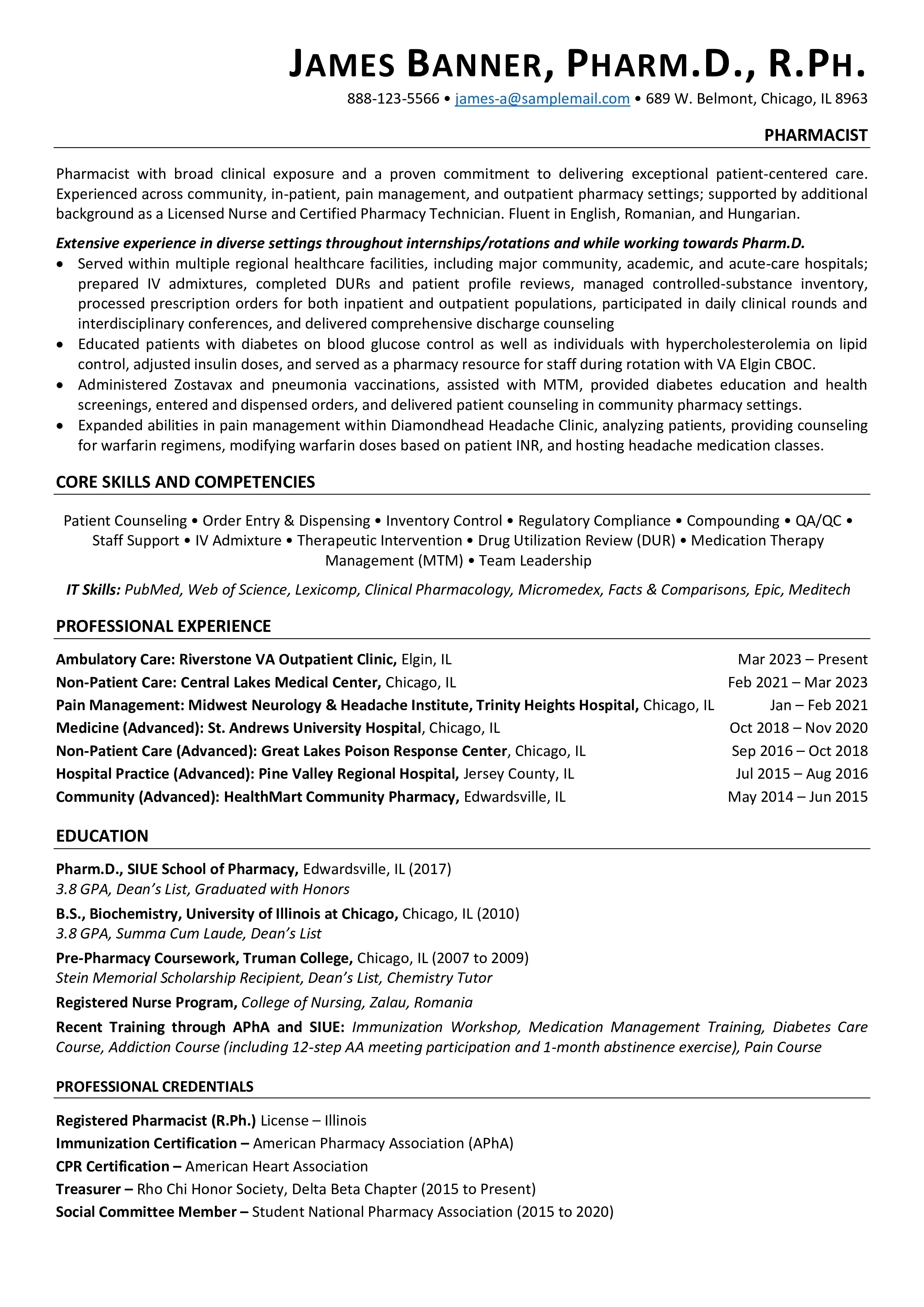





Creating your pharmacist resume
Be one of the thousands of pharmacists who will keep the healthcare industry thriving. Create your pharmacist resume today!
What is a pharmacist?
A pharmacist is a licensed healthcare professional and medication specialist responsible for ensuring that prescribed and over-the-counter medicines are safe, appropriate, and effective for each patient’s needs. Pharmacists offer additional clinical services beyond dispensing medications, such as administering immunizations, conducting basic health and wellness screenings, and helping manage and organize patients’ medications.
Pharmacists play an important role in supporting overall health and wellness by guiding proper medication use and healthy lifestyle choices. They collaborate closely with primary care physicians and other healthcare providers to help coordinate care, prevent medication-related issues, and contribute to improved health outcomes.
The functions of pharmacists differ according to their scope and specialty. They typically do the following tasks:
- Confirm the right medication and dosage
- Make sure new prescriptions and current medications or food don’t clash
- Inform individuals of possible side effects from medication
- Provide preventive care such as vaccinations
- Give instructions about the frequency and manner of taking medicines
- Teach ways to stay physically fit, eat healthy, and manage stress
- Work with insurance companies to ensure that patients receive their medication
What is a pharmacist resume?
A pharmacist’s resume is a summary of the pharmacist’s professional, educational, and training background, and their skills, licenses, certifications, and special accomplishments. The pharmacist's resume is designed to underscore relevant qualifications that indicate a pharmacist’s suitability for a job.
Crafting such a resume requires familiarity with what employers look for in a candidate. The next section provides a pharmacist resume template writing guide that will help you identify key qualifications to include in your resume for specific pharmacist roles. Read the following resume outline to learn more about it.
Creating your pharmacist resume
- Gather and organize your information. Before writing your resume, compile all essential details and review the job posting carefully to ensure alignment with the role's requirements. Customizing your resume for each position allows you to emphasize the qualifications and experiences most relevant to the employer. Organizing this information in advance makes it easier to present your background clearly and strategically.
Some of the information you can prepare:- Previous employers and corresponding dates of employment
- Notable achievements and measurable results for each role
- Professional licenses, certifications, or credentials
- Key duties and scope of responsibilities
- Typical patient or caseload volume
- Performance metrics or efficiency indicators, if available
- Team size or level of collaboration and supervision
- Experience related to specific pharmacist specialties or areas of focus
- Choose the right resume format. Selecting an effective resume format is important because each layout emphasizes different strengths and stages of a pharmacist’s career. The most widely used resume formats include the following:
Reverse-chronological format – This format works best for pharmacists with steady, long-term experience. It highlights professional growth by presenting work history from the most recent role backward, making career progression easy to follow.
Functional format – Designed for entry-level pharmacists or those shifting into a new specialty, this format prioritizes skills and core competencies over a detailed work history.
Combination (hybrid) format – Often preferred by mid-career pharmacists, this format blends skills and experience, providing a well-rounded snapshot of a pharmacist’s abilities and employment history. - Develop your resume. Begin crafting your resume by following a proven structure that emphasizes your qualifications. The outline in the next section provides key tips to help you create a compelling, attention-grabbing resume that aligns with employer expectations. With a well-organized resume, hiring managers can assess your value and suitability for the role immediately. The common sections of a pharmacist's resume include:
- Header or contact information
- Professional summary
- Work experience
- Skills
- Certifications and licenses
- Awards, recognitions, achievements, if any
Header
Your contact information is a required component of every resume and should appear prominently at the top – or the top of the sidebar – as the header. This section is typically the first area recruiters review, as it provides the details they need to contact you quickly and easily.
Include the following information in your contact details:
- Full name – Use your official name as it appears on professional or legal records. Avoid nicknames unless they are widely associated with your professional identity.
- Phone number – List a current, reliable number you can access regularly, preferably a mobile phone. If you are unable to answer calls, set up a professional voicemail.
- Email address – Provide a professional email address, ideally one that includes your name. Avoid informal or playful addresses.
- Location – While optional, location can be relevant for certain roles. For privacy, include only your city and state, rather than a full address.
- LinkedIn profile or professional website – Maintain an up-to-date LinkedIn profile or portfolio to support your resume. These platforms offer recruiters additional insight.
Professional summary
Write a brief professional summary of two to three sentences that presents your background, career focus, and motivation for applying. This section should quickly communicate your level of experience as a pharmacist, core skills, areas of expertise, certifications, and any significant accomplishments. An effective summary gives employers an immediate understanding of your qualifications and professional value.
If you are a newly certified or graduating pharmacist, consider writing a Career Objective section instead. An objective emphasizes skills gained through education or training and connects them to your long-term goals. You may also incorporate descriptive terms that reflect your work ethic and values, helping employers see your potential, professionalism, and dedication to growth early in your career.
Work experience
This section details your work history and professional development, making it one of the most important parts of your resume—particularly for pharmacist candidates with extensive industry experience. It often makes up the bulk of your resume. It allows recruiters to see how your career has evolved and the depth of expertise you have gained across different roles and work settings.
Include all relevant experience that contributed to your professional growth, such as full- time and part-time positions, internships, volunteer work, projects, or contract roles. Both paid and unpaid experiences should be listed if they strengthened your skills and demonstrate your qualifications for the position. List each role and its corresponding responsibilities using concise bullet points for brevity. Follow this format for each role.
- Job title | Employment dates
- Company/organization name | City, state
- Responsibility, purpose, and measurable outcome
Start each job entry with a clear, action-oriented word and follow it with a brief description of the task, its purpose, and the outcome or measurable result achieved. Use this format consistently across all listed pharmacist positions to create a clear and results-focused presentation.
To keep your resume concise and impactful, include approximately five bullet points for your current or most recent role and three bullet points for earlier positions. Customize your content to match the job posting and highlight your area of specialization. As you gain additional experience, revise your resume regularly to reflect your growth and distinguish yourself from less experienced candidates.
There are different types of pharmacists according to the work they do and the environment in which they operate. To illustrate Work Experience content variations for different levels of expertise, here are examples of pharmacist tasks and duties.
Pharmacist roles based on place of work
Clinical pharmacist
- Works in hospitals, clinics, and emergency departments
- Manages and dispenses medications and provides guidance on proper use
- Evaluates the effectiveness of medicines
- Works with care teams to determine appropriate treatment plans
- Supports patients of hospitals and rehab facilities, and those recovering from illness or surgery
Hospital pharmacist
- Hands-on or practicum experience in major hospitals – shows exposure to high medical environments, implies ample learning and training gained
- Special assignments such as the ICU – demonstrates ability to handle quality care in emotionally charged or critical care settings
- Certifications and state licenses – show basic knowledge and mastery of nursing procedures
Senior-level RN
- Works in the pharmacy of hospitals or healthcare facilities
- Checks medicine orders and prepares medications
- Collaborates with healthcare professionals to manage medications specifically for hospital and facility patients
- Supports inpatients, cancer patients undergoing treatments, ER patients, and outpatients recovering from surgery or undergoing certain procedures
Community or retail pharmacist
- Works in drugstores, small local pharmacies, or big-box stores with medicine sections
- Dispenses medicines and offers advice on prescriptions
- Serves parents, caregivers, and individuals with acute or chronic conditions
Home health or hospice pharmacist
- A home health pharmacist works with patients at home who are recovering from surgery or an illness or are managing chronic conditions.
- Makes sure that patients receive their medications and consume or use them properly
- A hospice pharmacist works with patients receiving end-of-life care at home or in a hospice facility, or with terminally ill patients
Long-term care pharmacist
- Works in long-term care environments like rehabilitation centers, assisted living facilities, and nursing homes
- Dispenses and manages medications for long-term care patients
- Educates facility staff on medicine safety protocols and potential side effects
- Works with older adults, patients recovering from illness or surgery, and patients with disabilities or chronic conditions
Compounding pharmacist
- Works at specialty or compounding pharmacies
- Prepares custom medications for patients with specific needs or allergies, or requires a specific dosage that is not available in regular drugstores
- Serves patients with specialized medication requirements, pediatric and elderly patients who need customized formulations
Industrial pharmacist
- Works at a pharmaceutical manufacturing company, research lab, or regulatory agency
- Performs research, development, and supervision of antimicrobial drug treatments
- Is an expert in microbiology and pharmacology
- Does not work with patients directly, and focuses on developing and optimizing medications
Academic pharmacist
- Works in colleges and universities, private companies, and research institutions
- Teaches at colleges or universities (also called pharmacy professors), and may train future pharmacists
- Conducts pharmaceutical research and contributes to drug development, policy, and education
- Does not work with patients directly; works with other healthcare professionals to improve patient care
PHARMACIST ROLES BASED ON SPECIALIZATION
Ambulatory care pharmacist
- Manages medications, educates patients about lifestyle changes, and acts as a patient advocate in clinics, outpatient centers, and doctors’ offices
Cardiology pharmacist
- Manages and dispenses medicines for patients with cardiovascular diseases
Consultant pharmacist
- Provides expert advice in treatment centers, nursing homes, and other healthcare facilities, along with healthcare professionals
Critical care pharmacist
- Manages complex medication regimens in life-threatening or severe conditions, working closely with medical practitioners and healthcare providers
Emergency medicine pharmacist
- Provides fast medication management in urgent care settings, such as emergency rooms or trauma centers
Infectious disease pharmacist
- Specializes in using antibiotics and other medications to treat patients with infections, especially those caused by bacteria, fungi, parasites, or viruses
Nuclear pharmacist
- Prepares, handles, and dispenses radiopharmaceuticals used in medical imaging and treatments, such as diagnosing and treating cancer
Oncology pharmacist
- Manages and dispenses medications for cancer patients, facilitates clinical trials, and contributes to cancer-related research
Pediatric pharmacist
- Dispenses and monitors medication treatments for children, works with healthcare providers to ensure the right drugs for pediatric patients
Pharmaceutical industry pharmacist
- Works in clinical research areas, labs, or manufacturing facilities, contributing to drug development, testing, manufacturing and regulatory affairs within the pharmaceutical sector
Psychiatric pharmacist
- Manages and optimizes medications for individuals with mental illnesses, such as depression, anxiety, schizophrenia and bipolar disorder
Senior care pharmacist
- Specializes in helping older adults manage medications and consume the right drugs at the correct doses
Skills
For pharmacists, it is essential to present a balanced mix of technical expertise and interpersonal competencies. Technical skills may include medication therapy management, pharmaceutical calculations, and proficiency with pharmacy systems such as Pyxis or Epic. Interpersonal skills are equally important, as they support effective patient counseling and collaboration with multidisciplinary healthcare teams.
To strengthen your resume, a dedicated Skills section must clearly highlight these capabilities, including software proficiencies and any specialized abilities that distinguish you from other candidates.
While your resume has a special section for relevant skills, you may incorporate them in your work experience to demonstrate practical application. For example, you can describe how you used pharmacy software to maintain accurate inventory records or how you communicated complex medication information in a clear, patient-friendly manner. This approach reinforces your qualifications and demonstrates how your skills translate into tangible impact in the real world.
Below are examples of pharmacist skills:
HARD SKILLS
- Controlled substance handling (DEA regulations)
- Dosage calculations
- Familiarity with SIG codes
- HIPAA trained
- Insurance billing and rejections
- Inventory management
- Knowledge of generic and brand medications
- Medication distribution
- Medication preparation
- Pharmaceutical research
- Prescription processing
- Quality assurance
- Restocking and expiry management
- Sterile and non-sterile compounding
- Understanding drug classifications
- Understanding NDC numbers
- Using pharmacy management software
SOFT SKILLS
- Active listening
- Attention to detail
- Communication
- Conflict resolution
- Detail-oriented
- Empathy
- Multitasking
- Patient communication
- Phone etiquette
- Prioritization
- Problem-solving
- Professionalism
- Record-keeping accuracy
- Team collaboration
- Teamwork
- Time management
ADDITIONAL TECH SKILLS (which are hard skills, too)
- AI tool familiarity
- Data reporting & analytics
- EHR navigation (electronic health records)
- e-Prescription processing
- HIPAA compliance awareness
- Label printing & barcode scanning
- Point-of-sale (POS) systems
- Regulatory compliance monitoring
- Telepharmacy support
- Vaccination assistance
Customizing this section to reflect your level of experience and area of specialization can help differentiate you from other pharmacist candidates. Strengthen your skills by providing context—highlight situations where these abilities were applied effectively in real-world clinical or professional settings.
Best practices for presenting pharmacist skills:
- Use a clear, bulleted format to improve readability and quick scanning.
- Emphasize skills that are most relevant to the position.
- Align your skills list with the requirements outlined in the job description.
- Incorporate keywords from the job posting to improve applicant tracking system (ATS) compatibility.
Education
Education and certifications are essential components of a pharmacist’s resume, as they reflect both professional qualifications and a commitment to ongoing development. Employers rely on this information to assess academic preparation, clinical competence, and readiness to deliver high-quality pharmaceutical care.
To be able to practice pharmacy in the United States, you must have a Doctor of Pharmacy degree from a program accredited by the Accreditation Council for Pharmacy Education (ACPE). Pharmacy graduates must also pass the North American Pharmacist Licensure Examination (NAPLEX) before they are allowed to practice in the U.S. Additional licensure requirements may be specified by each state board of pharmacy.
Include all your pharmacy education achievements in this section. To present them effectively, here are some tips:
- List your highest degree, field of study, and institution in a clear, concise format (e.g., Doctor of Pharmacy [PharmD], XYZ University).
- Recent graduates may include a graduation year along with relevant coursework, clinical rotations, or academic honors.
- Experienced pharmacists should keep this section streamlined and emphasize advanced degrees or specialized training.
- If you are moving into a new pharmacy specialty, highlight education or certifications that support that transition.
- Include professional credentials that strengthen your profile—such as immunization certification, sterile compounding training, or board certifications like BCPS or BCACP—and prioritize specialized, industry-recognized credentials to showcase advanced expertise.
Certifications and licenses
Professional certifications and specialized training are vital for pharmacists, as they demonstrate clinical competence, regulatory compliance, and a commitment to continued professional development. In many cases, these credentials are also mandatory for certain roles or specialties. To ensure they receive proper attention, consider positioning a Certifications and Training section directly after your Education section.
Within this section, include pharmacy-specific certifications and training programs that support your qualifications and align with the role you are seeking. These may include:
- Board Certified Pharmacotherapy Specialist (BCPS)
- Board Certified Ambulatory Care Pharmacist (BCACP)
- Board Certified Oncology Pharmacist (BCOP)
- Certified Diabetes Educator (CDE)
- Immunization Certification
- Compounded Sterile Preparations Certification (BCSCP)
- Pharmacy-Based Immunization Delivery (APhA)
- Medication Therapy Management (MTM) Certification
- Certified Geriatric Pharmacist (CGP)
Specialized pharmacists require additional advanced training and certifications to ensure competence in their chosen fields, such as the following:
- Compounded Sterile Preparations Pharmacy Specialty Certification (compounding pharmacist)
- Pharmacy Compounding Accreditation Board (PCAB) Sterile Pharmacy Accreditation (compounding pharmacist)
- Infectious Diseases Pharmacy Specialty Certification (BCIDP) (optional for industrial pharmacist)
- Nuclear Pharmacy Specialty Certification (BCNP ® )(nuclear pharmacist)
Make sure to include the certification name, issuing organization, and the date the certificate was obtained. By clearly organizing your certifications, you enable employers to quickly recognize your qualifications.
Publications and presentations
Another section that can significantly enhance your pharmacist resume is the articles you published, conference presentations you’ve done, and your research achievements. By including them in your resume, you underscore your commitment to keeping updated with the latest scientific developments. These pieces of information highlight your contributions to the industry and emphasize your credibility in academic research and clinical practice.
List down peer-reviewed articles, book chapters, and conference papers in an easy-to- digest format. Implement professional citation styles for referencing. Emphasize major awards, fellowships, and grants. Include links to online research profiles to provide access to your body of work.
Some helpful recommendations:
- Keep your pharmacist resume to no more than two pages, even if you have extensive experience. Prioritize the qualifications and accomplishments that are most relevant to the position.
- Choose clean, readable fonts that are easy for applicant tracking systems (ATS) to scan. While common fonts are ATS-compatible, consider a professional alternative that can help your resume stand out without sacrificing readability.
- Two-column layouts are generally acceptable for ATS and can be useful for experienced pharmacists who need to organize a large amount of information efficiently.
- Save and submit your resume as a PDF file, as it preserves formatting and is easier to view, share, and print across devices.
- Consider the employer’s location, as resume standards may vary by country. For example, Canadian resumes often follow a different structure than those used elsewhere.
Take your career to new heights with a compelling pharmacist resume from Resumeble
Be one of the most in-demand pharmacists in the industry. With our best resume writing services, create a knockout pharmacist resume today!